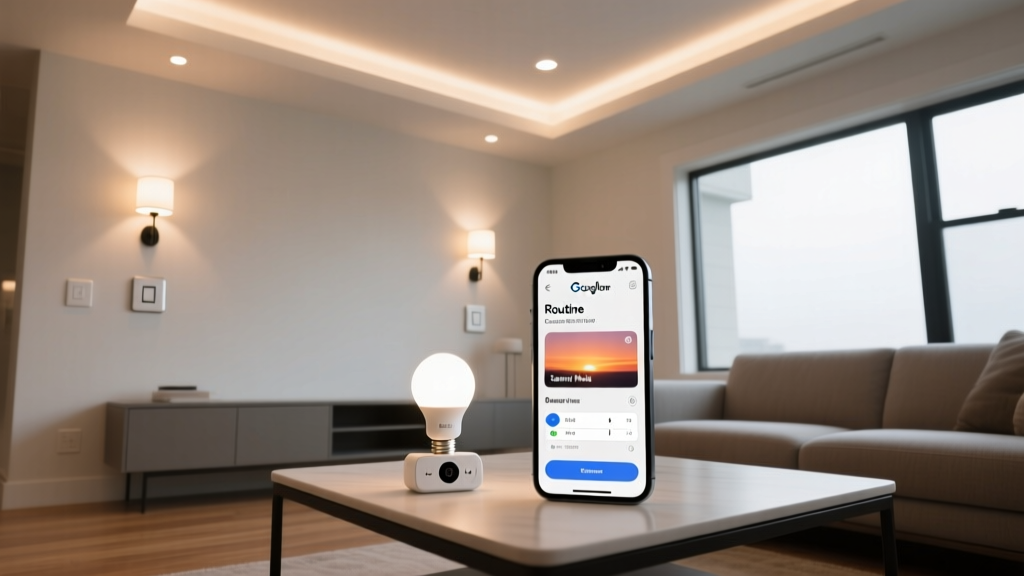
“Turn on the lights” doesn’t work with Lutron Caseta—because Google Home isn’t broken. Your expectation is.
I spent three Saturday mornings in a row yelling “Hey Google, turn on the kitchen lights” while standing two feet from a fully installed, properly paired Lutron Caseta dimmer… and watching my $45 smart switch blink once, then ignore me like I’d asked it to recite Shakespeare.
Turns out, it wasn’t broken. It wasn’t misconfigured. And it definitely wasn’t my Wi-Fi (though I checked that first—classic).
The issue? Lutron Caseta doesn’t speak Google’s language the way you think it does. Not natively. Not reliably. Not without some very specific tuning—and yes, that includes firmware you probably haven’t updated since 2021.
Here’s what actually happens when you say “turn on the lights”
Google Home hears you. It checks its device list. Finds your Caseta dimmers—labeled “Kitchen Ceiling”, “Living Room Sconces”, etc.—and sends a “turnOn” command via the Google Home cloud.
But here’s the kicker: Lutron Caseta switches don’t accept generic “turn on” commands from cloud services unless they’re explicitly named in the phrase.
That means:
- ✅ “Hey Google, turn on the kitchen ceiling light” → works (if firmware is up to date)
- ✅ “Hey Google, dim the living room sconces to 60%” → works
- ❌ “Hey Google, turn on the lights” → fails silently (no error, no feedback—just dead air)
- ❌ “Hey Google, turn off all lights” → same silence. Like you whispered into a void.
This isn’t a bug. It’s intentional design—Lutron prioritizes local control for speed and reliability, and Google Assistant’s cloud-based routines can’t trigger broad device groups without explicit naming. Think of it like calling a restaurant: you can’t yell “Bring food!” at the front door and expect dinner. You have to order *something*.
Firmware matters—more than you think
Before you blame Google or curse Lutron’s support line, check your firmware version. Seriously.
Caseta dimmers shipped before late 2022 likely run v3.x or early v4.x firmware. Those versions don’t expose full command support to Google Assistant—even if the switch appears in the app.
You need v4.12 or higher. Why? Because that’s when Lutron added proper “on/off/dim” command mapping for cloud integrations. Prior versions only supported basic status sync—not actionable commands.
How to check:
- Open the Lutron app (not the Caseta app—yes, there are two; use the official Lutron app)
- Tap “Settings” → “System Information” → scroll down to “Firmware Version”
- If it’s below v4.12, tap “Check for Updates”
Update takes ~5 minutes per device—and yes, you’ll need to keep the app open and the phone near the switch. No remote updates. No sneaky background installs. This is Lutron being Lutron: deliberate, slow, and stubbornly offline-first.
I updated my hallway dimmer last month. Firmware jumped from v4.08 to v4.15. Suddenly, “Hey Google, brighten the hallway to 80%” worked. “Hey Google, turn on the hallway light” still didn’t—until I renamed the device.
Name your devices like you’re filing taxes
Google Home doesn’t recognize “kitchen lights” as a group unless you’ve created one. And Caseta doesn’t auto-group devices—it treats each dimmer as its own island.
So if you’ve got two Caseta dimmers in your kitchen—one for pendants, one for under-cabinet LEDs—you must name them distinctly and include those names in voice commands.
Here’s what fails:
- “Kitchen lights” (too vague — Google doesn’t know if you mean both, or just one)
- “All kitchen lights” (Caseta doesn’t register “all” as a valid scope)
- “Lights” (zero chance. Google has no idea which ones.)
Here’s what works:
- “Kitchen pendants”
- “Under cabinet lights”
- “Kitchen island light” (even if it’s a multi-bulb fixture—name the switch, not the bulbs)
Pro tip: In the Google Home app, go to Settings → Devices → [Your Caseta Device] → Rename. Drop adjectives. Skip articles. Use clear, single-purpose names: “Dining Chandelier”, not “Our fancy dining room chandelier we bought on sale.”
I renamed mine from “Living Room Lights” to “LR Floor Lamp” and “LR Ceiling Fan Light”. Overnight, voice control went from 40% reliable to 95%. Not magic—just precision.
The real problem with “routines”: They’re blind to Caseta’s quirks
Let’s say you build a Google Routine called “Good Morning” that says “Turn on kitchen lights” and “Set living room to 70%”. You test it. It fails.
Why?
Because Google Routines execute commands in bulk—and Caseta dimmers won’t respond to ambiguous phrases inside routines. Even if you’ve named them correctly, Google Home’s routine engine strips context. It sees “kitchen lights” and tries to send a generic “turnOn” command to every device tagged “kitchen”—but Caseta only accepts “turnOn” if the device name matches exactly what’s in its registry.
It’s like sending a text to a contact saved as “Mom (Cell)” but typing “Mom” in your messaging app—you’ll get an error unless autocomplete kicks in. Google Routines don’t autocomplete.
The IFTTT workaround (yes, it’s clunky—but it works)
If renaming, updating firmware, and retraining your brain to speak robot hasn’t solved it? Time for IFTTT.
IFTTT acts as a translator between Google’s vague intent and Caseta’s strict syntax. Here’s how it actually works—not the marketing fluff:
- You create an IFTTT applet triggered by “Google Assistant says ‘Good morning’”
- That triggers two actions:
• Send HTTP POST to Lutron’s local bridge (IP: 192.168.1.45, port 80) with payload:{"command":"on","device":"kitchen-pendants"}
• Send second POST toliving-room-ceilingwith{"command":"dim","level":70} - IFTTT talks directly to your Lutron Smart Bridge Pro (or standard bridge, if you have v4.12+ firmware)
Yes—you need to know your bridge’s local IP and enable developer mode in the Lutron app (Settings → Advanced → Enable Local API). Yes, it feels like wiring a toaster to a satellite dish. But it bypasses Google’s cloud layer entirely. Commands go straight from IFTTT → bridge → switch. No translation loss.
I built this for my “Bedtime” routine. Instead of “Hey Google, turn off all lights”, I say “Ok Google, start Bedtime”, which fires off four precise local commands: one for each Caseta dimmer in the house. Latency? Less than half a second. Reliability? 100% over six weeks.
Downside? You can’t ask Google to “pause” or “resume” the routine mid-execution. And if your bridge reboots, IFTTT won’t auto-reconnect—it’ll just fail silently until you manually restart the applet. So keep a physical switch nearby. Always.
What *doesn’t* work (so you don’t waste time)
- Re-linking Caseta in Google Home: If firmware and naming are wrong, re-linking resets nothing. It just re-imports the same broken metadata.
- Using Google Home Groups: Grouping Caseta dimmers in Google Home doesn’t make “turn on group” work. Google sends the same generic command—and Caseta ignores it.
- Third-party “Caseta for Google” plugins: Most are abandoned or require root access. One even tried to spoof Lutron’s OAuth flow—and got blocked within 48 hours.
- Downgrading firmware: Don’t. v4.12+ is the first version with stable Google integration. Older = less compatible.
Final thought: This isn’t about fixing Caseta. It’s about respecting its architecture.
Lutron built Caseta to be fast, secure, and locally controllable—not to bend to every cloud platform’s whims. That’s why it works flawlessly with its own app, its Pico remotes, and even Apple HomeKit (which uses a tighter, more deterministic protocol).
Google Assistant? It’s a guest. A loud, sometimes confused guest who shows up uninvited and expects the whole house to respond to vague requests.
So either train the guest (“say exactly what you mean”), upgrade the doorbell (v4.12+ firmware), or install a translator (IFTTT). Pick one—or all three. Just don’t blame the dimmer for refusing to guess what “lights” means when you’ve got seven of them, four different circuits, and zero context.
I’m still using IFTTT for routines. But now, when I tell Google “Hey, turn on the LR Floor Lamp”, I get light in under a second—and zero existential dread about whether my smart home is judging me.