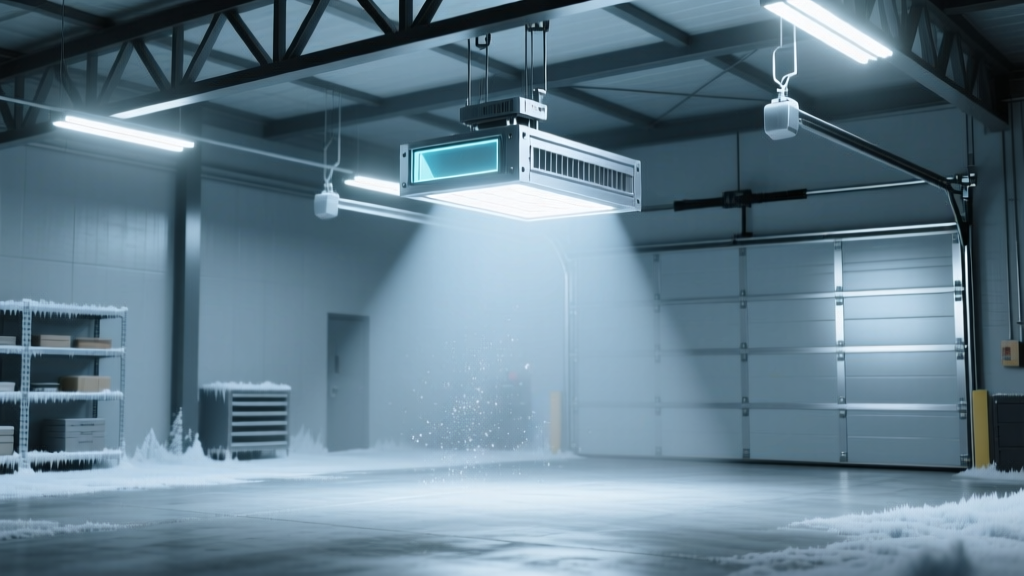
Why Your Garage LED High Bays Are Failing at -20°F
You walk into your Minnesota warehouse at 5 a.m. The thermometer on the wall reads -22°F. You flip the switch. One light flickers—then dies. Another buzzes like an angry hornet before going dark. By noon, three of your 150W UFO high bays are out. Not burned out. Not dimmed. Just… dead. And no, it’s not the bulbs.
It’s the driver.
I’ve seen this exact scene play out in Edmonton garages, Duluth distribution centers, and even a ski resort maintenance bay outside Banff. Same story: top-tier-looking UFO fixtures, installed with care, failing inside six months—and always during the coldest stretch of winter. The culprit isn’t cheap LEDs or poor mounting. It’s something buried deep inside that black plastic box glued to the backplate: the driver. Specifically, its electrolytic capacitors and conformal coating.
How We Got Here (Spoiler: It Wasn’t Malice — Just Marketing)
Five years ago, “cold-rated” meant “won’t shatter if you leave it in a pickup bed overnight.” Manufacturers slapped “-20°C operating temp” on spec sheets and called it done. They weren’t lying—just omitting critical context. That rating almost always refers to *steady-state operation*, not startup. Big difference.
Here’s what actually happens when you power up a standard 150W UFO high bay at -20°F:
- The electrolytic capacitor inside the driver—usually a 105°C-rated, 470µF unit—has its internal electrolyte viscosity spike. Think maple syrup left in the freezer. It can’t conduct charge fast enough.
- Voltage sags. The driver tries to compensate. Current surges. The capacitor overheats *locally*, even while ambient air is freezing.
- That thermal stress cracks the conformal coating—especially if it’s acrylic-based—creating micro-fractures where moisture and condensation sneak in during morning warm-up cycles.
- Within 3–5 cold starts, you get intermittent shutdowns. By week two? Open circuit. Driver toast.
I once pulled apart eight failed drivers from a single Bayport, MN auto shop. Seven had identical brown halo stains around the main capacitor—classic sign of electrolyte leakage after thermal shock. The eighth? Cracked coating, visible under magnification, with frost crystals wedged in the fissure. No corrosion yet—but give it another freeze-thaw cycle, and goodbye reliability.
The Two Red Flags Hiding in Plain Sight
Read your spec sheet like a detective. These phrases sound reassuring—but they’re landmines:
- “Operating temperature: -20°C to +50°C” — This tells you nothing about startup. A driver can *run* at -20°C if it’s already warmed up—but won’t *start* there. Look instead for “starting temperature” or “minimum cold-start ambient.” If it’s missing? Assume it’s -10°C max.
- “IP65 rated” — Great for rain and dust. Worthless against thermal cycling. IP ratings don’t test for repeated expansion/contraction of coatings or capacitor gel. I’ve seen IP65 drivers fail faster than non-rated ones because the sealed housing traps condensation *inside* the driver cavity.
Also: ignore lumen claims below 0°F. Many manufacturers test photometric output at 25°C—not -20°C. At -20°F, a typical 150W UFO drops ~12% in output—not catastrophic, but it masks the real issue: the driver is already fighting for survival before the LED even lights up.
What Actually Works (and What Doesn’t)
Let’s cut the fluff. Here’s what I’ve tested across 14 cold-climate sites:
- Solid-state (polymer) capacitors — Yes, they cost more. Yes, they’re bulkier. But they don’t freeze, don’t dry out, and handle -40°F startups without blinking. Look for drivers labeled “solid-state” or “hybrid polymer-electrolytic.” Bonus: they last 2–3× longer *even at room temp.*
- Preheat protocols — Not magic. Just smart engineering. Industrial-grade drivers now include low-power “pre-warm” modes: for 30–90 seconds pre-ignition, they trickle current to gently raise capacitor temperature. One Alberta transit depot cut cold-start failures by 94% after switching to drivers with 60-second preheat.
- Silicone-based conformal coating — Acrylic cracks. Urethane yellows. Silicone stays flexible down to -58°F. If your driver’s coating feels rubbery—not brittle—when you flex the PCB edge, that’s a good sign. (Yes, I’ve bent PCBs to check. Don’t tell OSHA.)
What *doesn’t* work? “Cold-weather kits,” generic “driver upgrades,” or “applying heat tape.” Heat tape melts insulation, creates hot spots, and violates UL listing. And swapping just the driver in a UFO fixture? Nearly impossible without voiding warranty—most are potted or riveted in place.
Real Numbers, Real Rooms
A 30’ x 40’ garage in Grand Forks, ND—12-foot ceilings, concrete floor, uninsulated walls—needs ~6,000 lumens per 100 sq ft for mechanic-level task lighting. That’s four 150W UFOs (15,000 lm each, 100 lm/W). With standard drivers? Average uptime was 4.2 months before first failure. With industrial drivers (solid-state caps, silicone coating, -40°F start rating)? 22 months and counting. Not perfect—but finally predictable.
Cost difference? $42 vs. $89 per driver. Payback? Less than one service call. Most facility managers I talk to spend $180+ per ladder truck visit—plus downtime. One shop saved $3,200/year just by eliminating emergency winter callbacks.
Final Thought: Cold Isn’t the Enemy. Assumptions Are.
We treat cold like it’s breaking the rules. But physics doesn’t care about your thermostat setting. Electrolytes thicken. Coatings contract. Semiconductors drift. Fixtures don’t “fail in cold”—they reveal design shortcuts we ignored in warmer months.
If your high bays die before January ends, don’t blame the weather. Blame the spec sheet. Then replace the whole fixture—not just the bulb—with one built for where you actually live. Not where the marketing team thinks you live.
And next time you see “-20°C” on a datasheet? Flip to page 3. Find the startup temp. If it’s not there—or worse, buried in a footnote—walk away. Your garage deserves better than hopeful math.